

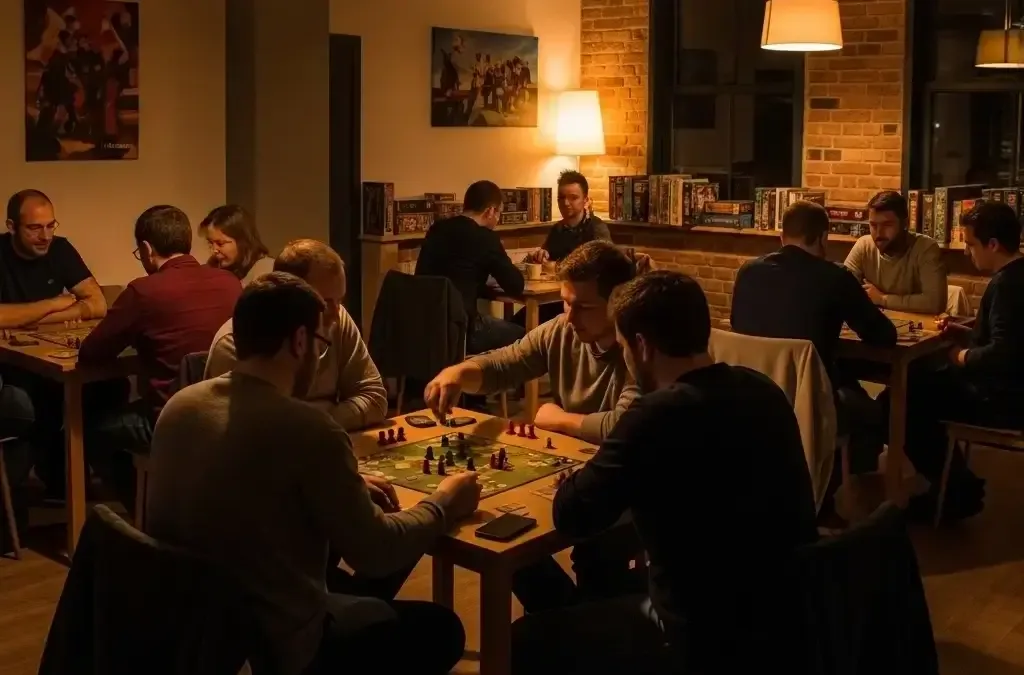
In Amsterdam there is a club that takes your phone at the door. They do not ask you to switch it off — they take it. You put it in a box and walk into a room where people read, do puzzles, play board games, and simply talk. Like the 90s, the reviews say. Except this is not the 90s. It is 2026, and The Offline Club is already opening rooms across Europe — in cities it has not reached yet, there are waitlists.
People join a waiting list to get into a place where their phones are not.
This is not a curiosity. It is a market. Today we take it apart: who makes money on it, what is actually sold, why it is growing faster than almost anything else — and what to do with that if you are building a product.
Part 1
Why contact became a product
Things that are abundant do not become products. Shortages do. Here is what is short right now.

Loneliness became normal
73% of Gen Z say they feel lonely “sometimes or always” (Forbes). A generation raised on an infinite feed and a thousand “friends” in a phone. There is contact. There is no bond.
Attention is eaten
The average person checks a phone dozens of times a day. Uninterrupted presence — looking someone in the eye for two hours — got rare enough that people now organize events for it. “Uninterrupted time has become a luxury,” says the founder of the British club The Switch Off, where women pay for two hours of quiet reading next to other people. Not for the book. For continuity.
Content turned synthetic
When a model can generate text, image, voice, even a “personality,” human presence is the one thing that cannot be faked. The economics are simple: whatever can be generated cheapens toward zero. Whatever cannot, gets expensive.
The market has already answered.
2.6%
experiences market growth, 2023–2025
0.8%
goods market growth over the same years
McKinsey: experiences grew three times faster than goods. In 2025 US landlords leased more commercial space to services and experiences — wellness, fitness, experience concepts — than to ordinary stores, for the first time.
People buy fewer things and more experiences. Inside experiences, one product is growing fastest: being with people. For real.

Part 2
Market map: four layers
01
Offline clubs and phone-free events
The loudest segment of the year. Eventbrite reports that phone-free events — “hand in your phone at the door” — grew 567% worldwide in one year (2024→2025), attendance 121%, geography from 5 countries to 12. The UK: +1200% events, +1441% attendance. The US: +388% and +913%. The first quarter of 2026 already passed a third of the entire previous year.
What they sell:
- The Offline Club (Netherlands → Europe): “trade screen time for real time.” Screen-free cafés, phone-free dinners with strangers, waitlists in new cities, and a franchise for anyone who wants to open one.
- RhythmRx (Denver): a dance floor without phones or alcohol — “come back to yourself through music, movement, and human connection.” Hundreds of people a night.
- The Switch Off (London): quiet evenings for women — phone in, two hours of reading with a glass of wine. Soft socializing: being next to people without having to talk.
- Kanso (US): offline hobbies and screen-free meetups.
- Yondr and Lockabl: the infrastructure of this world — lockable phone pouches, already normal at concerts and nightclubs.
Look at the wording. Nobody sells “an event.” Everyone sells a state: calm, presence, “come back to yourself,” “like the 90s.” The product is a feeling. The event is packaging.
02
Clubs of a repeated practice
The second layer is not a one-off. It is a ritual. Once a week, the same time, the same people.
The classic case is run clubs. Strava’s Year in Sport recorded +59% participation in run clubs worldwide, and the number-one reason members give is not health and not fitness. Social connection. Runner's World puts it directly: run clubs became “the new group chat” — a place to make friends, meet partners, and network. Running is the alibi. Contact is the product.
Same mechanic in book clubs (wine plus a conversation about a book, where the book is the excuse), supper clubs, and dinner with strangers — twelve people, $120 a seat, and the guests care less about the menu than about who is at the table.


03
Contact professions
A market produces the jobs that serve it. This is the interesting part if you are deciding where to move.
Community manager. Five years ago: “the person who answers in the chat.” Today the US Bureau of Labor Statistics projects 7% employment growth in community management through 2035 (faster than the labor market), median pay around $80,000. Community openings have been growing about 35% year over year since 2023. The career ladder already looks like any serious function: Junior → Senior → Head of Community → VP of Community, at $90–130k+. Companies stopped treating community as a nice extra. It is retention infrastructure.
Offline producer. The person who designs a live experience: the room, the arc of the evening, the guest list, the rituals, light, music, pace. A director of contact. The role is growing inside agencies (experiential marketing is tens of billions and still growing, including where the rest of marketing is being cut) and as a standalone craft: producers of clubs, dinners, retreats.
Head of Community / director of experience. A new kind of C-level: not responsible for content, responsible for how people connect to the brand and to each other.
What they share: judgment, taste, and emotional intelligence. The last things to be automated. While some people fear AI will take the job, this market is creating work AI cannot take.
04
Infrastructure
Behind the clubs and the producers sits another layer, where the money is quietest and largest:
- space: lofts, anti-cafés, clubhouses — McKinsey has already recorded commercial real estate turning toward experiences;
- platforms: Eventbrite, Meetup, Partiful — ticketing and RSVP infrastructure;
- presence hardware: the same Yondr pouches;
- the B2B layer: brands buy offline contact as media. Pinterest ran a fully phone-free activation at Coachella and got more conversation than the usual “take a selfie and post it” mechanic. 70% of social comments about the festival were about the absence of phones.
Part 3
What people actually buy
Take the four layers apart and the purchase is not the event and not the service. People pay for four things that cannot be generated.
Presence
To be heard without someone scrolling. Two hours of uninterrupted attention is the new luxury.
Belonging
“I am one of these people.” A club gives an identity: I run with them on Saturdays, I am from this city.
Witness
Someone notices that you came. And that you didn’t. In a community that expects you, you cannot be an anonymous ID.
Ritual
Repetition that structures the week. The habit of being among people.
AI can write you a warm letter, speak in the voice of someone you love, and build a perfect playlist. It cannot witness your life. It will not notice you were gone. It will not be glad you came.
So the contact market is not an anti-technology market. It is a complement: the more of life is generated, the more the real thing costs.
Part 4
Business models
The practical part, if you are a founder. Models that already work:
- Tickets. Pay for the night: $15–150. Simple, fast cash, but the economics hit the room and the producer. Good for testing demand.
- Membership. The club as MRR: a fixed fee for regular meetings. Harder entry, steadier revenue, stronger identity. Works where there is a ritual and a group worth belonging to.
- Franchise / chapters. This is how The Offline Club scales: method + brand + city waitlists, a local operator opens the room. Contact does not scale in code. It scales as a system, the way gyms once did.
- B2B: selling contact to brands. Companies pay for offline activations, club sponsorships, private events for their own audience. A live contact with a person is worth more than a thousand impressions.
- A second-layer product. Merch, media, courses, “start your own club” tracks — the club becomes a platform.
A ticket is a product. Membership is an asset.
The pattern: entry is the cheap part. Belonging is the expensive part.

Part 5
What this means for you
If you are building a product, five things I take from this map:
 Contact is a product layer, not a marketing layer. Not “let’s throw an event for PR,” but “where in our product do people meet each other.”
- Community is not a chat. A chat is a tool. Community is when people know each other’s names. No regular meetings and no rituals — you have a contact database, not a community.
- A human is a premium feature. “A real person works with you” can and should be priced higher. Human support, human onboarding, human attention — that is no longer a cost. It is a tier.
- Offline is a differentiation channel. While everyone pours budget into the same digital ads, a live event separates a brand harder than any creative. Even technology companies (hello, Pinterest at Coachella) are buying the absence of technology.
- If you are an expert, your time is the product. The market pays for presence. Masterminds, live teardowns, closed dinners — formats where you do not scale, and you cost a lot.
I keep thinking about that club in Amsterdam.
People hand their phones into a box. Sit down with puzzles and board games. Talk to strangers. Then they get the phones back, step outside, and write: “this is my happy place,” “I have been waiting for a community like this my whole life.”
Notice what they do not say. They do not say “great event.” They talk about a place and about people.
For twenty years we built a world where you can get everything without leaving the couch. Now people pay to get off the couch. They wait on lists in order to give up a phone. They buy memberships to run in the morning with strangers who, a month later, are theirs.
The human contact market sells what cannot be generated, cannot be faked, and cannot be downloaded.
What in your product cannot be generated? And are you already selling it — or giving it away?

FAQ
Why is the offline-contact market growing now?
Two forces landed together: a loneliness epidemic (73% of Gen Z feel lonely, Forbes) and the cheapening of everything AI can generate. Live presence became scarce — and the market is pricing it.
How do you make money on this if the business is small?
Start with tickets: a regular live meeting for your own audience. If a ritual and a stable group appear, move to membership. Contact sells as a product layer: “a real person works with you” is already a premium feature.
Won’t this die the way every trend dies?
The data says otherwise: phone-free events have grown for five quarters in a row and spread from 5 countries to 12, and practice clubs are built on habit — the most durable retention mechanism there is.